Notes from the GenAI Summit workshop, Valencia
2026 SHEET 320/333
Maya and I delivered an hour-long workshop at the GenAI Summit in Valencia last Friday. Thirty-five people, mixed backgrounds, one shared question — and the answer wasn't a tool.
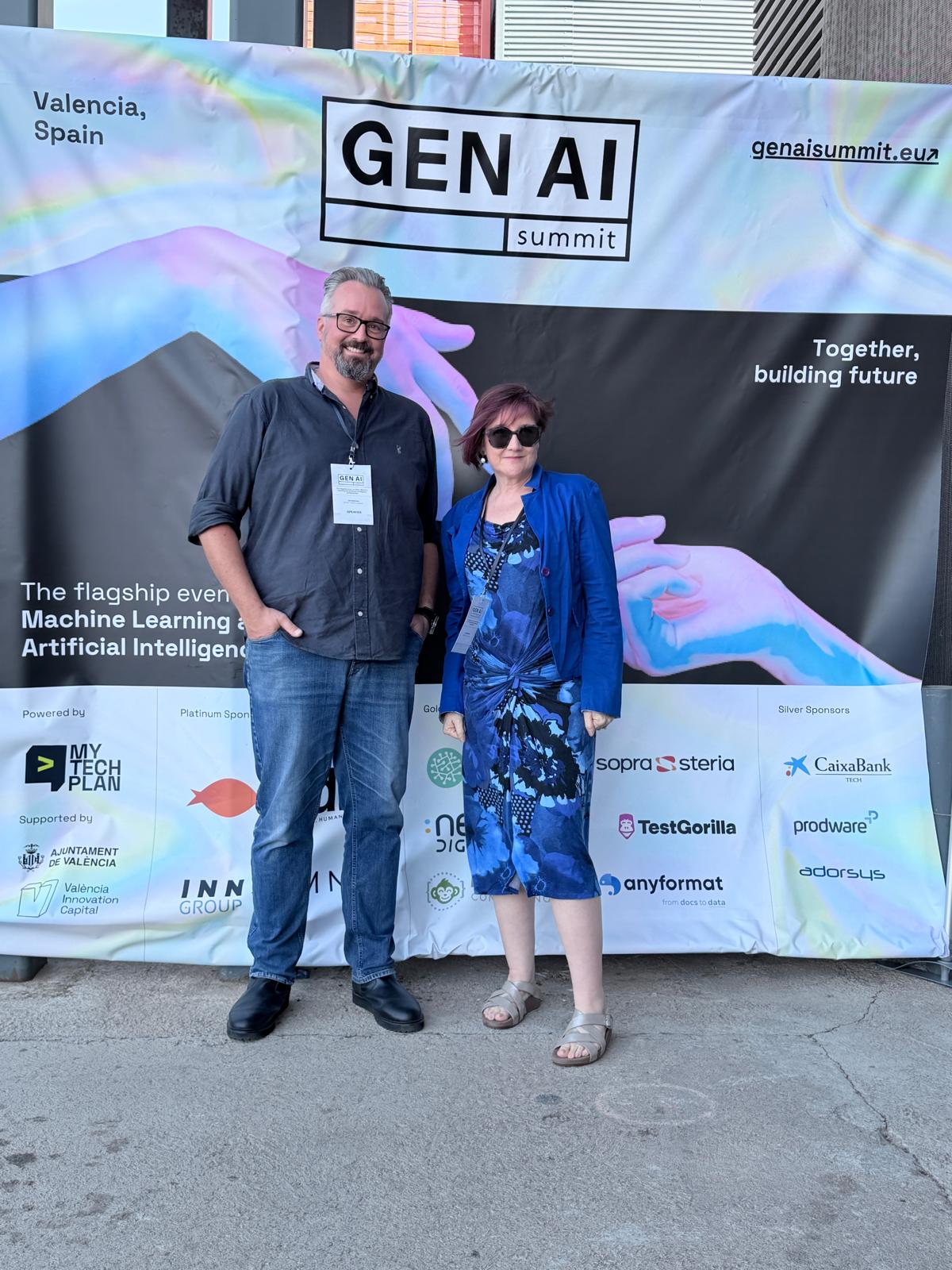
Last Friday, Maya and I ran a post-lunch workshop at the GenAI Summit in Valencia. About thirty-five people, an hour, and the slot you get when the room has just had three espressos with their tortilla.
The audience was a real mix. Enterprise people, fractional CTOs, designers, accountants, a handful of solo operators trying to figure out which way to point their afternoon. Languages slid in and out of English. Most had used ChatGPT or Claude for something real. Hardly anyone had built a way of working around it.
Underneath every question was one shared question: how do I use AI to actually run what I’m doing, instead of just collecting more tools?
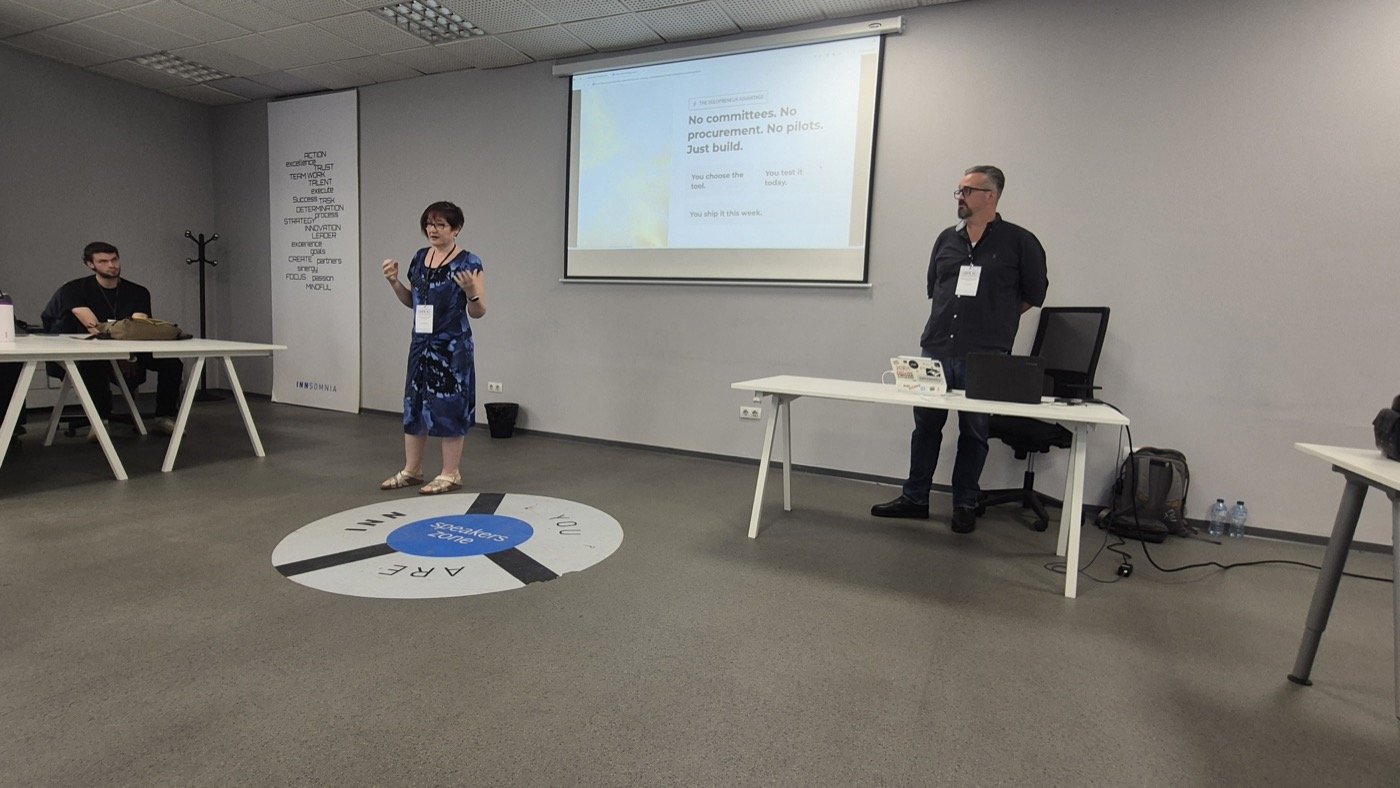
The line that earned its keep
One slide line earned that header:
The tool isn’t the answer. The fit is.
Most of the room had come hoping we’d say “use this tool.” What they got was a frame that put the tool last and the fit first. Fit is the match between the task you’re trying to do, the context the AI can actually see, and the order you move things through. The tool plugs into the system. The system is yours.
Everything else we said in the next forty minutes was a version of that.
The moment that landed
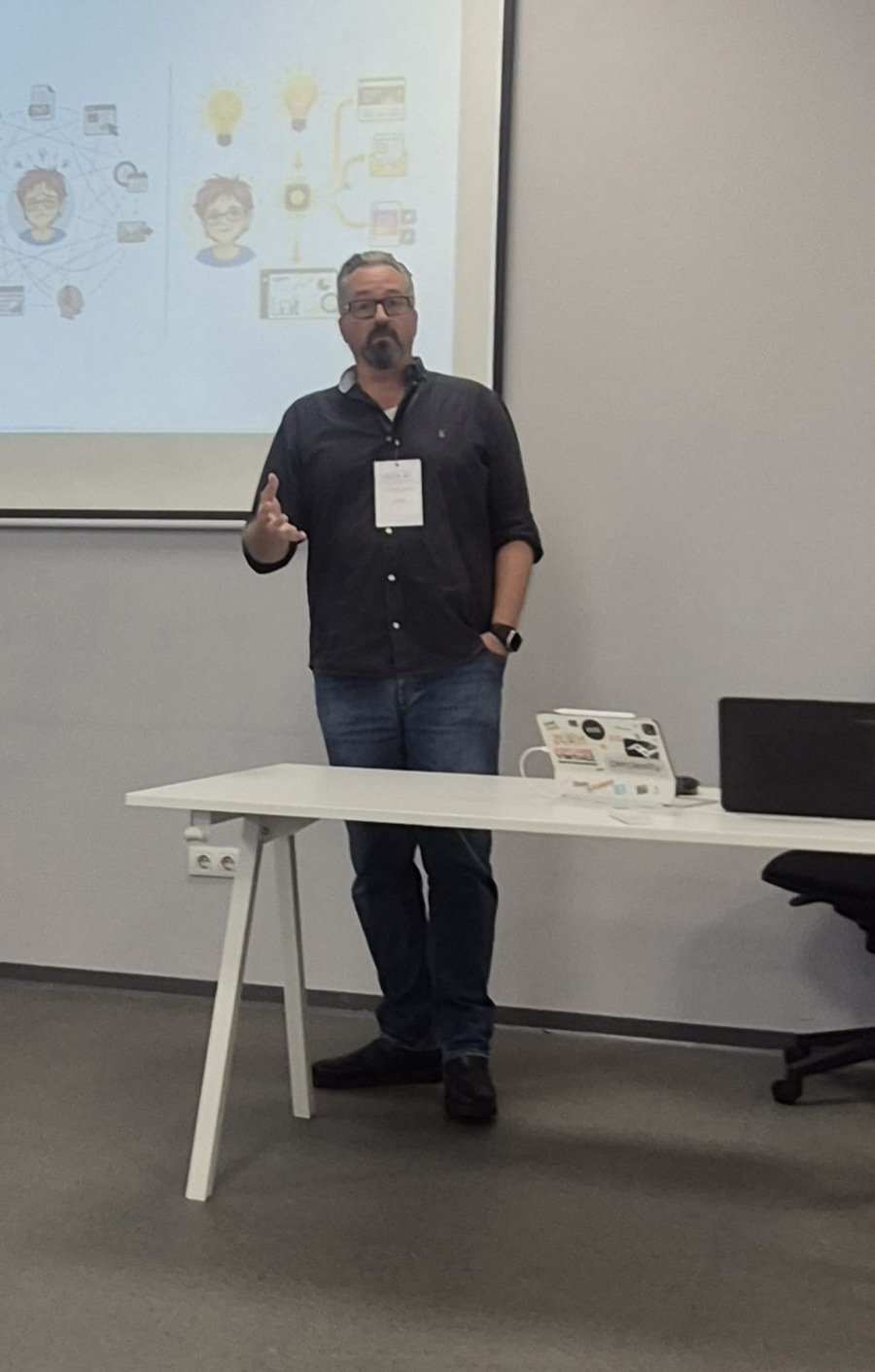
In one of the demos I pointed Claude Code at a markdown file full of instructions and told it: “Execute this plan.”
The first hand up wasn’t about what Claude did. It was about what was on screen: “What was that prompt? Why was it so long?”
That was the question worth waiting for. The honest answer is that it wasn’t a prompt — it was a plan. And once you’re building real things with multiple steps, prompt craft is maybe ten percent of the job. The other ninety is naming the outcome, gathering the context the AI will need, and sequencing the work so each output feeds the next.
I spent more time on that one slide than any other. It was the one I most wanted people to walk away with.
The thing we should have covered
One topic didn’t come up, and it should have.
If you’re building anything with Claude Code, Cursor, Codex, or any of the other AI coding tools — and most of the solopreneurs we work with are, or will be — you need version control. A way to save your work, a way to go backwards when the AI’s “small fix” breaks everything, a way to ship with confidence because you know you can roll back.
It’s the single most important habit for anyone vibe-coding their own tools, and it didn’t make the cut. So I wrote it up afterwards instead, as a members-only guide for the SoN crowd: Good Principles for Vibe Coders.
What I’m taking away
Three things, mostly for me:
- People will ask the question they came in with, regardless of what’s on the slide. The job is to keep showing the underlying frame until enough of them switch tracks.
- The right number of slides is fewer than you think. The most useful moments came from the room, not the deck.
- Maya and I work well as a pair. We’ve delivered versions of this material before, but this was the cleanest run — the one where the frame actually landed as a frame, not just a collection of slides.
The full set of takeaways — fit before tool, plans beat prompts, APIs are everywhere, the two-handed AI problem, keeping your brain local — is in this week’s Signal Over Noise issue. Less recap, more frame.
Thanks to the GenAI Summit team and Innsomnia for the room, the audience, and the post-coffee slot. If the frame above is a fit for your team or event, the workshops page has the details.