AI as A Co-Operating System

Your knowledge work has no operating system.

Your notes live in one app, your tasks in another, your AI assistant knows nothing about either. You context-switch between tools, copy-paste into ChatGPT, and lose track of what you’ve already written. Every conversation starts from zero.

A co-operating system is the missing layer — Claude and your brain, working the same files, from the same context, toward the same goals.

Co-operating because you work together. Operating system because it’s infrastructure, not an app.


The Current State

You’ve tried the productivity systems. GTD, PARA, Second Brain. They work for a while, then become digital graveyards.

The tools don’t talk to each other. The AI doesn’t know your context. Your brain holds all the connections, and that doesn’t scale.

AI assistants have amnesia. You re-explain your projects, your preferences, your situation — over and over. The conversation that should build on three months of work starts fresh every time.


What Changes

A co-operating system connects reasoning to memory to action.

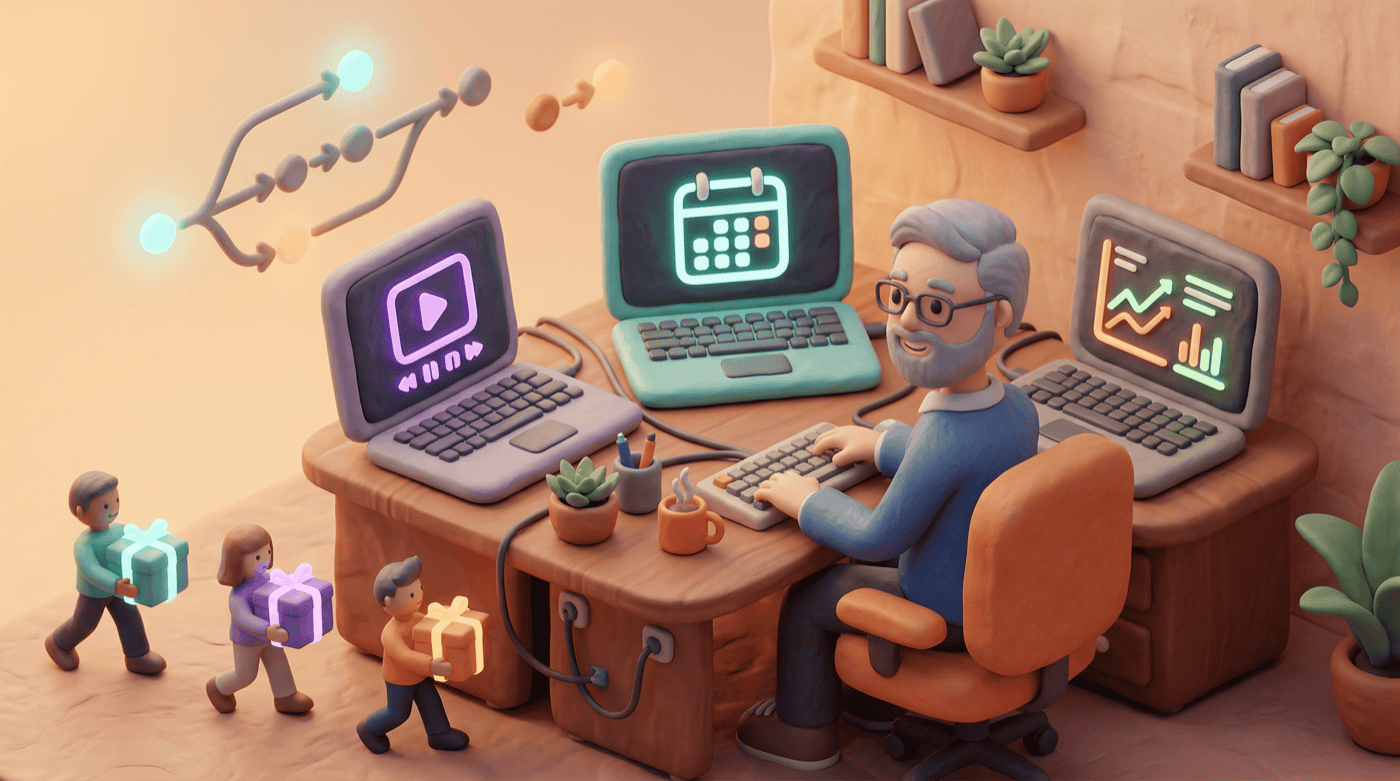
Claude Code lives in your terminal, reads your files, and executes on your behalf. Obsidian stores your notes, projects, and daily logs in plain text you control. MCP servers connect your calendar, email, research tools, and anything else you need.

The stack:

LayerComponentRole
ReasoningClaude CodeThinks, writes, executes
MemoryObsidianNotes, projects, daily logs
ReferenceCalibre + ChromaDBBooks, papers, research
ActionMCP ServersCalendar, email, APIs

You own every layer. Nothing requires a subscription you don’t control.


Four Principles

Integration over capability. A focused system that works beats a powerful tool that doesn’t. The value isn’t in any single component — it’s in how they connect.

You lead, AI assists. Human judgment remains irreducible. You make the strategic decisions, set the direction, protect the voice. AI handles scale, consistency, and the tedious parts. The boundary is deliberate.

Local-first, file-based. Your vault, your machine, your data. If the tools disappear tomorrow, your notes remain. No subscription for access to your own thoughts.

Context compounds. Every conversation builds on the last. Your system learns your projects, your patterns, your voice. Six months of daily notes becomes a searchable work history your AI can reference. Time invested today pays forward.


Why Now

For years, the pieces existed but didn’t fit — note-taking apps couldn’t reason, AI assistants couldn’t remember, and automation required developers.

Claude Code changed the equation — an AI that lives in your terminal, reads your files, and acts on your behalf. The Model Context Protocol made local integrations practical. The reasoning layer became real.

The stack is now complete. The question is whether you’ll build one.


Where to Start

The Co-Operating System is the idea — the philosophy behind building AI infrastructure that makes you more capable over time.

Minervia teaches you how to build one. The methodology, the templates, the documentation. Start here if you want to set up your own.

Cerebro is mine, working today. The reference implementation, the daily driver, the proof it’s not theoretical. See how the pieces fit together.

Pick your entry point.


Built by Jim Christian. The belief: AI should amplify thinking, not replace it. The method: connect your knowledge to your tools. The result: a system that actually works the way you do.